Human Behaviour
The Genes You Carry Is the First Trap
16 June 2026·3 min read
Most people never question why they repeat the same failures, the same fears, the same small decisions. They call them family values.
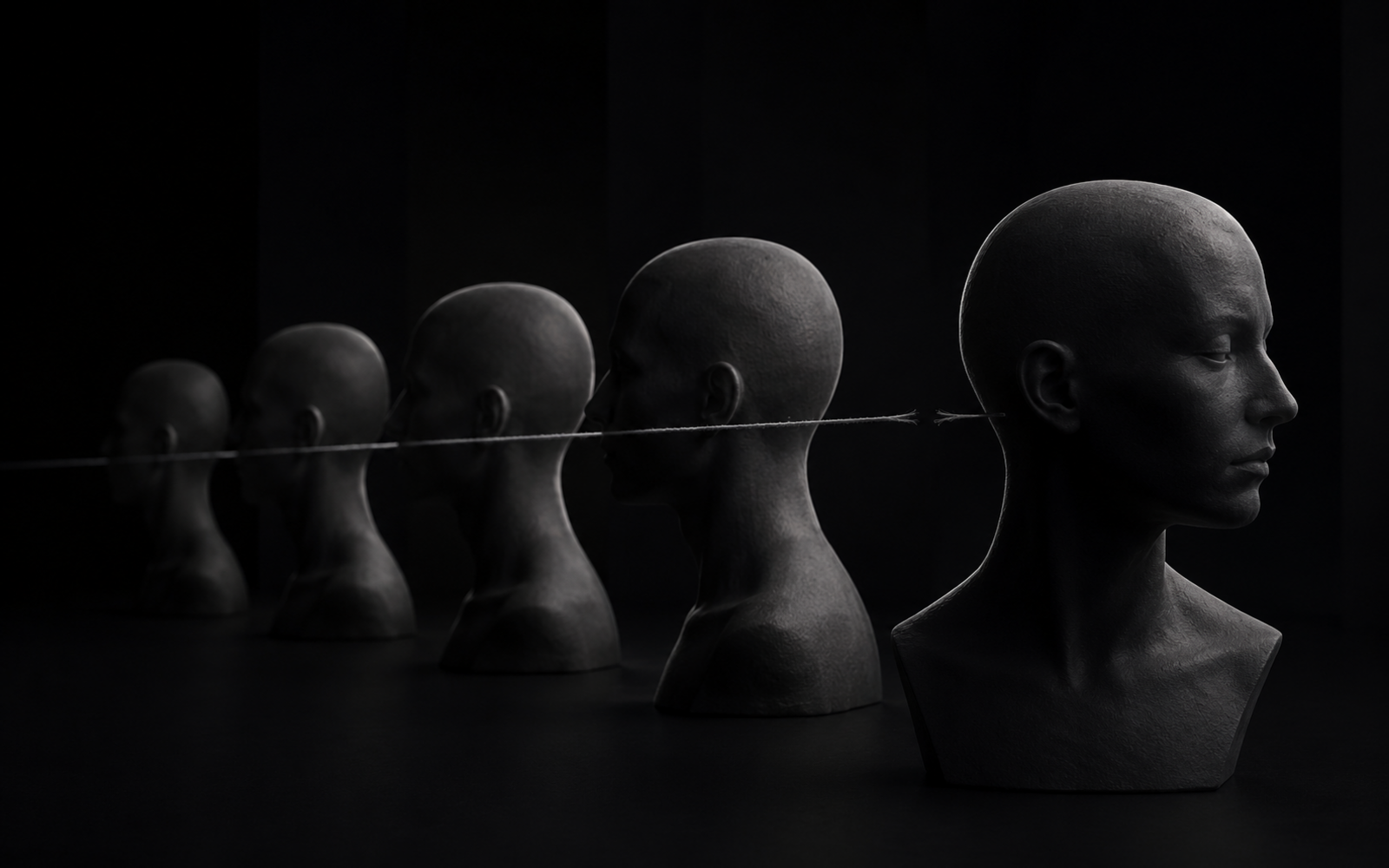
The invisible cage you were born into is your own bloodline, and most people never think to question it. They repeat the same failures, the same betrayals, the same victimhood, the same scarcity thinking, and the same small-minded decisions their parents and grandparents made, and then they call it family values or say that is simply how we are.
While you were sleeping, your DNA was still running the program your grandfather ran. The same fears. The same excuses. The same small decisions that kept an entire bloodline mediocre.
They told you education was the trap. It isn't. The first trap is in your own blood, and what follows is the psychology and the biology of why you unconsciously repeat your ancestors' mistakes, along with what it takes to break out and become the first ruler in your lineage.
The science of the trap
You do not only inherit eye colour and height. Trauma, stress, scarcity and betrayal patterns can switch genes on or off and pass down through epigenetic inheritance. Studies suggest that fear responses, anxiety patterns and even addiction tendencies can transmit across two, three or more generations without any change to the DNA code itself.
You can see it plainly enough in the children of war survivors, and in people raised in poverty or in abusive families, who often carry the same survival mode long after their own lives have become safe.
The blood mindset in action
The inherited program shows up in ordinary decisions. It is there when you self-sabotage success because your family never had any, and when you stay loyal to people who betray you because of an ancestral instinct that puts family first regardless of what family does. It is there when you undervalue yourself or chase validation you do not need. In the Nepal context it is there in the inherited inferiority carried out of colonised and oppressed bloodlines, still shaping choices generations later.
"This is how we do things in our family."
That may be the most dangerous sentence in your life.
How rulers break the pattern
It starts with brutal self-awareness. Map your family patterns the way you would draw a genogram, and write down the things that keep repeating: the failures, the fears, the money habits, the relationship styles. Seeing them on paper is uncomfortable, and that discomfort is the point.
Then comes conscious rebellion, which is simply the decision that you are the mutation in the bloodline. From there it is a matter of rewriting the code daily through new habits, a new environment, new sources of information, and inputs your ancestors never had access to.
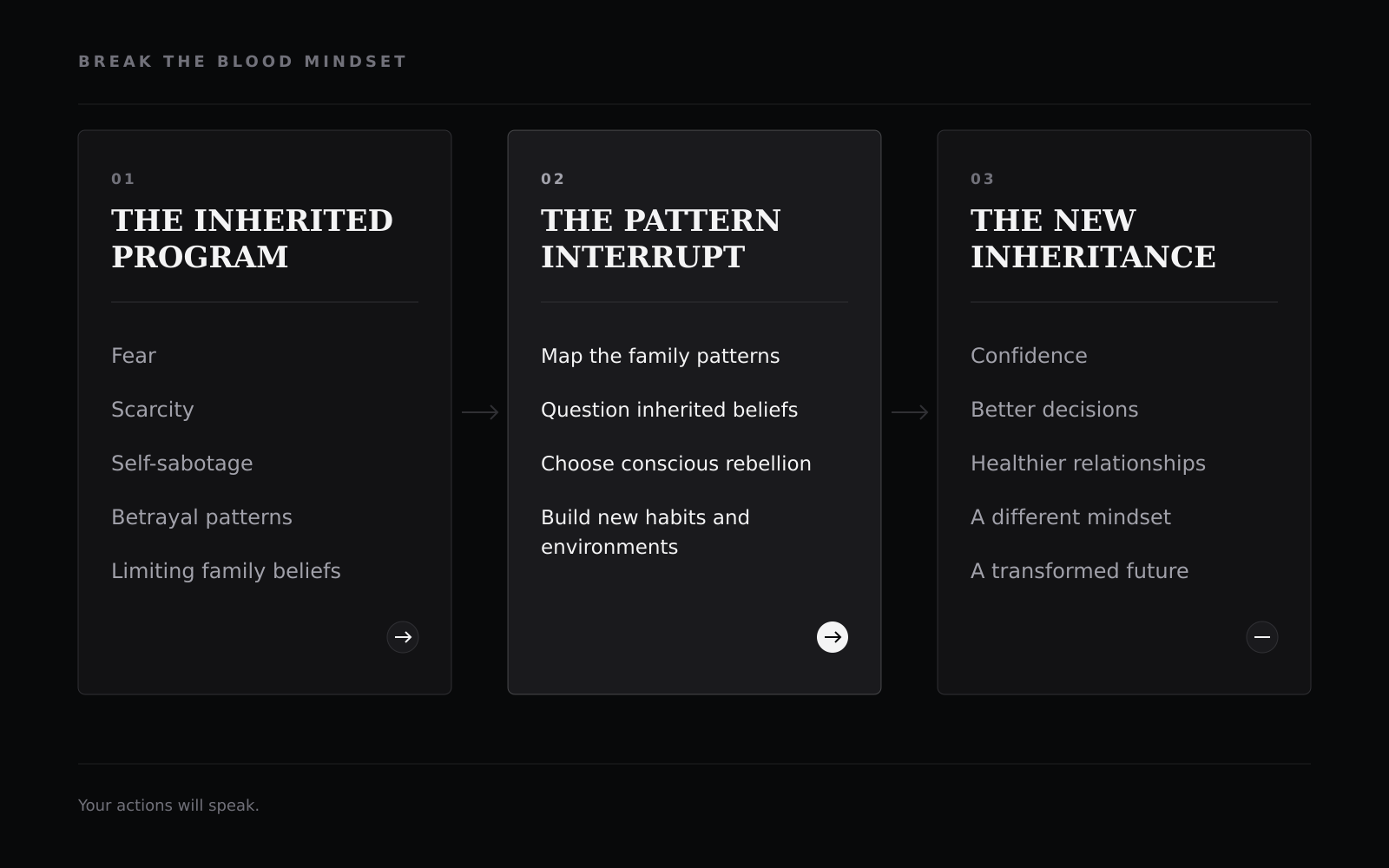
The last move is the largest one: build something substantial enough that your own children inherit a completely different mindset. Create a different inheritance instead of passing on the one you were handed.
Break the blood mindset
They betrayed the old version of you because that version was still running the family program. The new one broke the blood mindset. Your actions will speak for themselves, and their regret will arrive on its own schedule.